Poland remains one of the fastest-growing European markets for imported dried fruits, driven by increasing demand from wholesalers, food manufacturers, retailers, and healthy snack brands. Among the most sought-after products are bulk dried apricots, organic dried apricots, and wholesale dried apples sourced directly from Uzbekistan. Choosing the right exporter requires more than comparing prices—it involves evaluating quality standards, certifications, logistics, and long-term supply reliability. This guide explains how importers can make informed purchasing decisions while reducing commercial risks.
Many companies entering the dried fruit market ask similar questions before placing an order. Understanding these factors early helps avoid unnecessary costs and delays.
- Why Uzbekistan has become one of Europe’s preferred sourcing destinations.
- Which dried fruit products offer the strongest commercial potential.
- How to evaluate an export supplier before signing a contract.
- What determines wholesale pricing.
- Which quality standards matter for European buyers.
- How logistics influence delivery costs and timing.
- Which risks can affect international procurement.
- How to establish long-term cooperation with a reliable exporter.
Why Poland Imports Bulk Dried Apricots from Uzbekistan
Uzbekistan has earned a strong reputation as one of Central Asia’s leading producers of dried fruits. The country’s sunny climate, fertile soil, and generations of farming expertise create ideal conditions for growing naturally sweet apricots and apples with high nutritional value. Modern processing facilities, improved export infrastructure, and growing investment in quality control have strengthened Uzbekistan’s position in the European market.
For Polish importers, sourcing directly from producers offers several advantages. Direct cooperation reduces intermediary costs, provides greater transparency, and allows buyers to negotiate customized packaging, product specifications, and delivery schedules.
Demand is especially concentrated in major commercial centers such as Warsaw, Poznań, Gdańsk, Łódź, Kraków, and Wrocław, where importers supply supermarket chains, food distributors, confectionery manufacturers, health food retailers, and HoReCa businesses. The growing popularity of natural snacks and clean-label ingredients continues to expand opportunities for premium dried fruit imports.
Companies seeking long-term partnerships often prioritize exporters with proven international experience, transparent documentation, and stable production capacity. Information about one such supplier and its export capabilities can be found on the Sultan Agro website, where buyers can review the company’s background and international operations.
Product Portfolio Available for Wholesale
While dried apricots remain the flagship export product, many European buyers prefer consolidating several dried fruit categories into a single shipment. This simplifies logistics, lowers transportation costs, and improves inventory management.
Bulk Dried Apricots
Bulk dried apricots are available in several commercial grades suitable for different industries and distribution channels.
Typical options include:
- Natural sun-dried apricots
- Sulphured dried apricots
- Organic dried apricots
- Premium export grades
- Industrial processing grades
Product selection depends on the buyer’s market segment. Retail brands usually prioritize appearance and uniformity, while food manufacturers focus on consistency, moisture levels, and processing performance.
Organic Dried Apricots
Demand for organic dried apricots continues to grow across Europe as consumers increasingly choose products with certified organic origin.
Organic buyers generally require:
- certified cultivation practices;
- full product traceability;
- laboratory testing;
- separate production lines;
- compliance with European organic regulations.
Although organic products usually command higher prices, they also provide stronger margins for distributors serving premium retail channels.
Wholesale Dried Apples
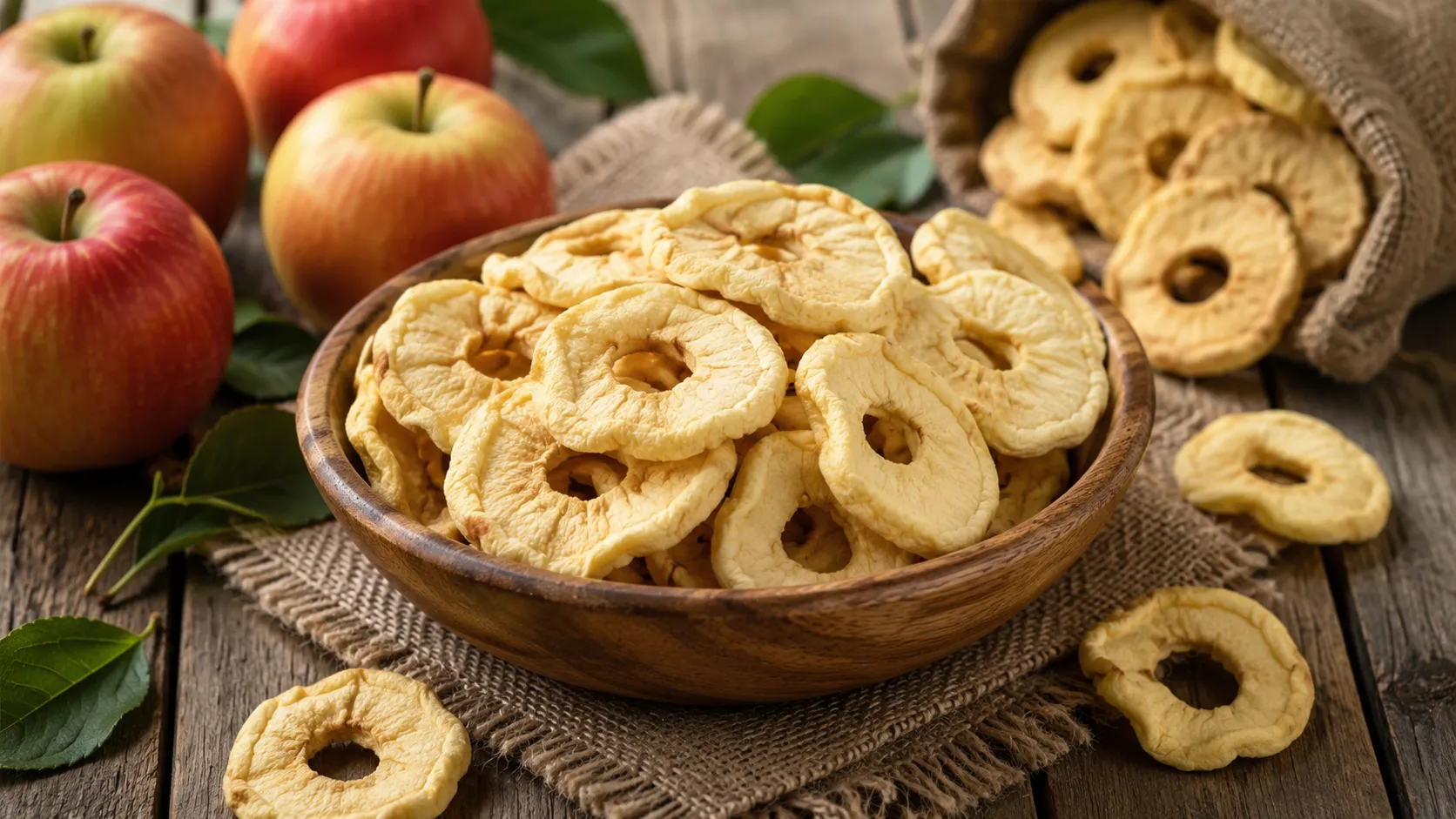
Wholesale dried apples have become another attractive export category thanks to their versatility in breakfast cereals, snack mixes, bakery products, confectionery, and food processing.
Common export formats include:
- apple rings;
- apple slices;
- diced apples;
- cubes for industrial applications;
- organic dried apples.
Offering multiple dried fruit categories from one supplier often improves container utilization and reduces overall procurement costs.
A wider assortment of export products, packaging options, and specifications can be explored through the company’s product catalogue, allowing buyers to source several product lines from one exporter.
Packaging Options
Export packaging should meet both logistical and commercial requirements. Most suppliers offer flexible solutions depending on customer needs.
Typical packaging formats include:
- 5 kg cartons;
- 10 kg cartons;
- 12.5 kg export boxes;
- 25 kg bulk cartons;
- retail-ready packaging;
- private label production;
- palletized shipments;
- customized branding.
Selecting the correct packaging helps minimize damage during transportation while improving warehouse efficiency.

How to Choose a Reliable Bulk Dried Apricots Supplier
Finding an exporter should never be based solely on price. A lower quotation can easily become more expensive if product quality, documentation, or logistics fail to meet expectations.
Experienced importers usually follow a structured supplier evaluation process before signing supply agreements.
Step 1. Review Export Experience
An established exporter should demonstrate successful deliveries to multiple international markets, particularly within Europe. Companies with consistent export history are generally more familiar with customs procedures, documentation, and buyer requirements.
Step 2. Verify Production Capacity
Reliable suppliers should clearly explain:
- annual production volumes;
- seasonal availability;
- warehouse capacity;
- processing equipment;
- sorting technology;
- quality management procedures.
Stable production capacity is particularly important for distributors requiring continuous supply throughout the year.
Step 3. Request Product Samples
Before placing a commercial order, buyers should evaluate representative samples for:
- colour consistency;
- moisture content;
- fruit size calibration;
- texture;
- aroma;
- cleanliness;
- absence of foreign materials.
Independent laboratory analysis can provide additional assurance when purchasing large volumes.
Step 4. Review Certifications and Documentation
Professional exporters should provide complete export documentation, including certificates required for customs clearance and European food safety regulations.
Buyers typically request:
- Certificate of Origin;
- Phytosanitary Certificate;
- Commercial Invoice;
- Packing List;
- laboratory analysis reports;
- organic certification where applicable.
Complete documentation minimizes customs delays and supports smooth import procedures.
Quality Standards That Matter in Poland
Product quality extends far beyond visual appearance. Importers evaluate dried fruits according to measurable technical specifications that directly affect shelf life, processing efficiency, and consumer satisfaction.
Important quality indicators include:
- calibration consistency;
- moisture percentage;
- colour uniformity;
- sorting accuracy;
- absence of insects and foreign matter;
- mechanical damage;
- sugar content;
- storage stability.
Uniform calibration is especially valuable for retail packaging because it improves product presentation and customer perception. Moisture levels must also remain within agreed specifications to reduce spoilage risks during transport and storage.
European buyers increasingly expect suppliers to operate under recognized food safety systems such as HACCP and ISO-based quality management. Organic product lines require additional certification and full traceability from orchard to finished shipment.
What Determines Wholesale Prices?
Wholesale pricing depends on numerous interconnected factors rather than a single market indicator. Understanding these variables allows importers to compare quotations more accurately and negotiate realistic contracts.
The main pricing factors include:
- annual harvest volume;
- product grade;
- organic certification;
- calibration size;
- packaging format;
- minimum order quantity (MOQ);
- transportation costs;
- exchange rate fluctuations;
- seasonal demand;
- container availability.
While lower prices may appear attractive, experienced buyers often evaluate total procurement cost rather than unit price alone. Consistent quality, reliable delivery schedules, reduced claims, and dependable communication frequently generate greater long-term value than the cheapest initial quotation.
Evaluation Factor | Premium Supplier | Standard Supplier | Why It Matters |
Quality Control | Comprehensive inspections | Basic checks | Reduces claims and returns |
MOQ | Flexible | Higher minimums | Easier inventory planning |
Certifications | Multiple international standards | Limited documentation | Supports EU compliance |
Logistics Support | Full export coordination | Basic shipment only | Faster and smoother deliveries |
Technical Communication | Dedicated export team | Limited support | Faster issue resolution |
Export Logistics from Uzbekistan to Poland
Efficient logistics are one of the most important factors in international dried fruit trade. Even premium-quality products can lose value if deliveries are delayed, documents are incomplete, or packaging is unsuitable for long-distance transportation. Experienced exporters work with established freight forwarders and plan shipments according to seasonal demand and available transport capacity.
Depending on the agreement between buyer and supplier, different Incoterms can be used:
- FCA (Free Carrier)
- FOB (Free on Board)
- CFR (Cost and Freight)
- CIF (Cost, Insurance and Freight)
- DAP (Delivered at Place)
Each option determines which party is responsible for transportation costs, insurance, customs procedures, and delivery risks. Buyers new to importing from Uzbekistan often prefer DAP because it simplifies logistics, while experienced importers frequently negotiate FCA or FOB terms to work with their own logistics partners.
A typical purchasing process includes several stages:
- Sending an inquiry with product specifications.
- Receiving a commercial quotation.
- Approving samples.
- Agreeing on packaging, quantities, and payment terms.
- Signing the export contract.
- Production, sorting, and packaging.
- Quality inspection before shipment.
- Preparation of export documents.
- Customs clearance and transportation to Poland.
- Delivery to the buyer’s warehouse.
Careful planning at every stage reduces delays and helps maintain product quality throughout the supply chain.

Market Trends in Poland
Demand for dried fruits in Poland has remained stable over recent months, supported by consumer interest in healthier foods, natural ingredients, and convenient snack products. Importers continue expanding their assortments with premium and organic products while manufacturers increasingly use dried fruits in breakfast cereals, bakery products, confectionery, and snack mixes.
According to recent international trade statistics and European market reports, several trends are shaping purchasing decisions:
- growing demand for organic dried fruits;
- increasing popularity of clean-label ingredients;
- expansion of private-label retail products;
- stronger focus on traceability and food safety;
- preference for direct sourcing from producers instead of intermediaries.
Wholesale buyers are also placing greater emphasis on supply stability. Rather than purchasing from multiple small traders, many distributors now seek long-term cooperation with exporters capable of providing consistent quality and predictable delivery schedules throughout the year.
Recent trade data published by the International Trade Centre (ITC Trade Map) indicates that European imports of dried fruits continue to be supported by stable consumer demand and diversified sourcing strategies. Likewise, guidance from the European Commission Access2Markets platform highlights the importance of compliance with EU food safety and import documentation requirements for exporters entering European markets.
One noticeable trend is the growing willingness of importers to pay a premium for suppliers that provide complete documentation, transparent quality control, and responsive communication. The total cost of procurement is increasingly measured by reliability rather than purchase price alone.
Common Risks When Importing Bulk Dried Apricots
Every international transaction carries some level of risk, but most problems can be avoided through proper supplier verification and clear contractual agreements.
The most common issues include:
- inconsistent product quality;
- incorrect fruit calibration;
- excessive moisture content;
- damaged packaging;
- incomplete export documents;
- shipment delays;
- unexpected logistics costs;
- communication problems during production.
Professional buyers usually reduce these risks by requesting detailed product specifications before production begins. Samples should be evaluated carefully, and quality requirements should be clearly defined in the purchase agreement. Independent laboratory testing may also be appropriate for large-volume shipments.
It is equally important to confirm production capacity before placing seasonal orders. During harvest periods, exporters with limited processing resources may experience longer lead times, affecting delivery schedules.
Regular communication throughout production and shipment helps identify potential issues early, allowing both parties to resolve them before products leave the warehouse.
Building a Long-Term Partnership
Successful dried fruit importing is rarely based on one-time purchases. Most distributors and manufacturers prefer stable partnerships that ensure consistent quality, predictable pricing, and reliable deliveries.
Long-term cooperation allows buyers to:
- reserve production capacity before harvest;
- negotiate better commercial conditions;
- standardize product specifications;
- simplify repeat ordering;
- reduce procurement risks;
- improve inventory planning.
Reliable exporters also become familiar with individual customer requirements, making future orders faster and more efficient.
When evaluating a supplier, buyers should consider responsiveness, technical knowledge, willingness to provide samples, transparency during negotiations, and experience with European customers. These factors often have a greater impact on long-term success than small differences in product pricing.
Frequently Asked Questions
How can I buy bulk dried apricots directly from Uzbekistan?
The usual process begins with a product inquiry, followed by receiving specifications, pricing, samples, and an export quotation before signing a supply agreement.
What is the typical minimum order quantity?
MOQ depends on the exporter and packaging format. Many suppliers offer flexible quantities for container shipments, while larger orders generally receive more competitive pricing.
Are organic dried apricots available?
Yes. Many exporters supply certified organic dried apricots with documentation that meets European import requirements.
How long does delivery to Poland usually take?
Transit time depends on the selected transport route, customs procedures, and agreed delivery terms. Buyers should confirm estimated delivery schedules before production begins.
Which documents are required for importing dried fruits into Poland?
Typical documentation includes a Commercial Invoice, Packing List, Certificate of Origin, Phytosanitary Certificate, and any additional certificates required by European regulations or the buyer.
How can product quality be verified before shipment?
Most professional importers request production samples, laboratory analysis where necessary, detailed specifications, and pre-shipment inspections before the goods are dispatched.
Which packaging options are available?
Exporters generally offer bulk cartons, retail packaging, private-label solutions, and customized packaging based on customer requirements.
Why do many Polish companies source directly from Uzbekistan?
Direct sourcing often provides better pricing, improved communication, greater transparency, and stronger control over product quality and production schedules.
Conclusion
Uzbekistan has established itself as a reliable source of high-quality dried fruits for the Polish market. Competitive production costs, favorable growing conditions, expanding processing capabilities, and experienced exporters make the country an attractive sourcing destination for wholesalers, distributors, manufacturers, and retail brands.
Choosing the right supplier requires careful assessment of product quality, certifications, logistics capabilities, documentation, and production capacity. Importers that invest time in supplier evaluation typically achieve more stable deliveries, lower procurement risks, and stronger long-term commercial relationships.
Whether purchasing bulk dried apricots, organic dried apricots, or wholesale dried apples, successful cooperation depends on transparency, consistent quality, and professional export support throughout every stage of the supply chain.
Companies interested in discussing product specifications, packaging options, current availability, or requesting a personalized wholesale quotation can contact the export team through the contact page. Establishing direct cooperation with an experienced Uzbek exporter can help build a dependable supply chain for the growing Polish dried fruit market.
If you have questions about the format or do not know what to choose, leave your number — we will call you to answer all your questions.